

The MAXOUT Lawyer | June 1, 2026 | Truck Accidents
18-Wheeler Accidents on Highway 171 and I-49 — What Louisiana Law Says
Highway 171 runs straight through the heart of our region — Leesville to Many to Florien and south toward Lake Charles. I-49 carries heavy commercial traffic through Central Louisiana day and night. Both roads are major trucking corridors, and both see serious accidents involving 18-wheelers and commercial trucks with frightening regularity.
If you or a family member was hit by a big rig on one of these roads — or anywhere in West Central Louisiana — this is not a standard car accident case. Truck accident cases are fundamentally different in terms of who is liable, what laws apply, what evidence needs to be preserved, and how aggressively the other side will defend.
Why Truck Accident Cases Are Different
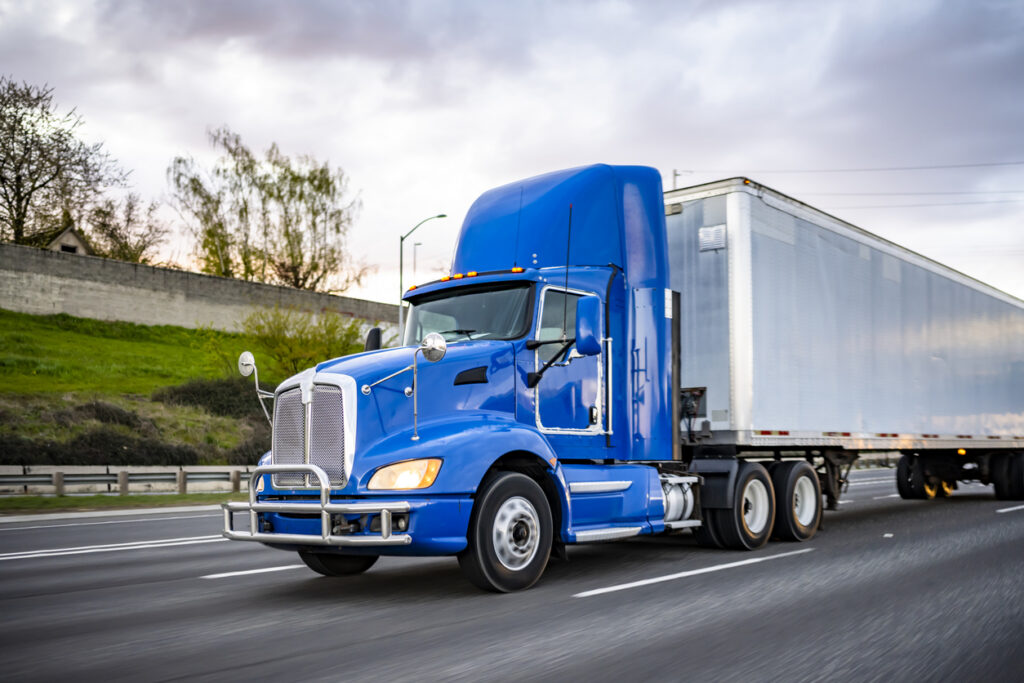
When a fully loaded commercial 18-wheeler hits a passenger vehicle, the physics are brutal. A loaded semi can weigh up to 80,000 pounds. A passenger car weighs roughly 4,000. The force differential is catastrophic, and the injuries reflect it — spinal injuries, traumatic brain injuries, amputations, and fatalities occur in truck accidents at rates far exceeding ordinary car crashes.
Beyond the severity, the legal landscape is more complex:
- Federal regulations — not just state law — govern commercial trucks
- Multiple parties may be liable: the driver, the trucking company, the cargo loader, the truck manufacturer, maintenance contractors
- Trucking companies have experienced claims teams and defense attorneys who respond immediately after a crash
- Critical evidence — black box data, driver logs, maintenance records — exists in these cases and must be preserved immediately
Federal Motor Carrier Safety Regulations
Commercial trucks that operate in interstate commerce — which includes most 18-wheelers on Highway 171 and I-49 — are regulated by the Federal Motor Carrier Safety Administration (FMCSA). These regulations set standards for:
- Hours of service. Truck drivers are limited in how many consecutive hours they can drive and how many hours per week. Fatigue-related violations are a leading cause of serious truck accidents.
- Drug and alcohol testing. Commercial drivers are subject to mandatory pre-employment, random, post-accident, and reasonable suspicion testing.
- Vehicle maintenance. Trucking companies must maintain inspection and maintenance records for every vehicle. Brake failures, tire blowouts, and lighting defects are frequently found to have been pre-existing conditions.
- Driver qualification files. Carriers must verify drivers’ qualifications, licenses, and safety records. Hiring an unqualified driver can create direct liability for the company.
- Electronic logging devices (ELDs). Most commercial trucks now use ELDs that record detailed information about driving time, speed, location, and stops.
When a trucking company violates any of these regulations and that violation contributes to an accident, it can be evidence of negligence. We request these records as one of our first steps in every truck accident case.
Who Can Be Held Liable in a Truck Accident?
One of the most important distinctions in truck accident cases is that liability often extends well beyond the driver. Depending on the circumstances:
The Trucking Company
Under respondeat superior, a trucking company is liable for the negligent acts of its employees while they’re performing their job duties. But companies also have independent liability for negligent hiring, negligent retention of unsafe drivers, inadequate training, and pressure on drivers to violate hours-of-service rules to meet delivery schedules.
The Cargo Owner or Shipping Company
Improperly loaded or secured cargo is a major cause of truck accidents — particularly rollovers and jackknife crashes. The company responsible for loading the cargo may share liability if improper loading contributed to the crash.
The Truck or Parts Manufacturer
If a mechanical failure contributed to the accident — brake failure, steering failure, tire defect — the manufacturer may face products liability exposure.
Maintenance Contractors
Some trucking companies outsource maintenance. If a third-party maintenance provider failed to identify or repair a known defect, they may be a liable party.
Identifying all responsible parties matters enormously because it determines the total available insurance coverage. A single truck driver may have limited personal coverage, but the trucking company, cargo owner, and manufacturer may each carry substantial policies.
The Evidence That Must Be Preserved Immediately
Time is critical in truck accident cases. Trucking companies and their insurers dispatch investigators to crash scenes immediately after a serious accident. They are gathering evidence before you know you have a case.
Evidence that must be preserved urgently:
- Black box / ECM data — records speed, braking, throttle position, and other vehicle data in the seconds before impact. This data can be overwritten.
- Electronic logging device records — show the driver’s hours and whether they were in violation of hours-of-service rules.
- Driver’s phone records — subpoenaed to check for distracted driving at the time of the crash.
- Dash cam footage — many commercial trucks now have dash cams. Footage is often overwritten on short cycles.
- Driver qualification and training files — to assess whether the driver was properly licensed and trained.
- Drug and alcohol test results — post-accident testing is mandatory after serious crashes; we need those results.
- Truck inspection and maintenance records — for the preceding months before the crash.
When we take a truck accident case, one of our first steps is sending a spoliation letter to all potentially responsible parties demanding preservation of this evidence. If they destroy records after receiving that notice, there are serious legal consequences.
Louisiana Crash Data on Highway 171 and I-49
These roads see elevated rates of serious commercial vehicle crashes due to a combination of factors: high freight volume, road conditions, inadequate lighting in rural stretches, and the behavior of drivers unfamiliar with local road characteristics. Commercial trucks operating out of Texas frequently use Highway 171 as a north-south corridor, and I-49 handles significant freight movement between Shreveport and Lafayette.
The rural nature of these corridors also means crash response times can be longer, evidence can be disturbed before law enforcement arrives, and witnesses may be scarce. These factors make thorough documentation and immediate legal involvement even more important.
The Prescriptive Period — Don’t Miss It
Truck accident claims in Louisiana follow the same personal injury prescriptive period: two years for accidents on or after July 1, 2024; one year for earlier accidents. However, some federal
regulations require preservation notices within much shorter windows, and the trucking company’s records retention obligations may affect what’s available if you wait.
In truck accident cases specifically, early attorney involvement is not just advisable — it can be the difference between a well-documented case and one where the critical evidence no longer exists.
You Need Someone Who Understands This Fight
Trucking companies and their insurers are well-organized and well-funded. They work these cases hard from the first call, and they are counting on injured victims to be overwhelmed, to accept the first offer, or to miss a deadline.
We know how they operate. And we know how to build the kind of case that forces a real reckoning.
Hit by an 18-wheeler on Highway 171, I-49, or anywhere in Louisiana? Call MAXOUT.
Leesville: (337) 239-6292 | DeRidder: (337) 239-0777 | Toll-free: (888) MAXOUT-1
Truck accident cases require immediate action. Call today — the consultation is free. No fee unless we recover for you.